Why Online Branding Isn’t Just a Fancy Logo—It’s Your Startup’s Lifeline
Starting a new business is exhilarating, but in today’s crowded digital space, simply having a great product or service isn’t enough. You need a strong online brand to stand out. It’s not just about a cool logo or a catchy name; it’s the sum of every experience your customer has with you. It’s your personality, your voice, and your promise. A robust online brand builds trust, fosters loyalty, and turns casual browsers into dedicated customers.
At markmydigi.com, we know that for a beginner, this can feel overwhelming. That’s why we’ve put together this comprehensive guide. We’ll demystify online branding, provide a clear roadmap, and equip you with the latest insights, including how to leverage AI to make your brand visible to search engines and humans alike.
The Foundation: Building a Brand from the Ground Up
Before you can build an online presence, you need a solid foundation. This is where you define who you are and what you stand for.
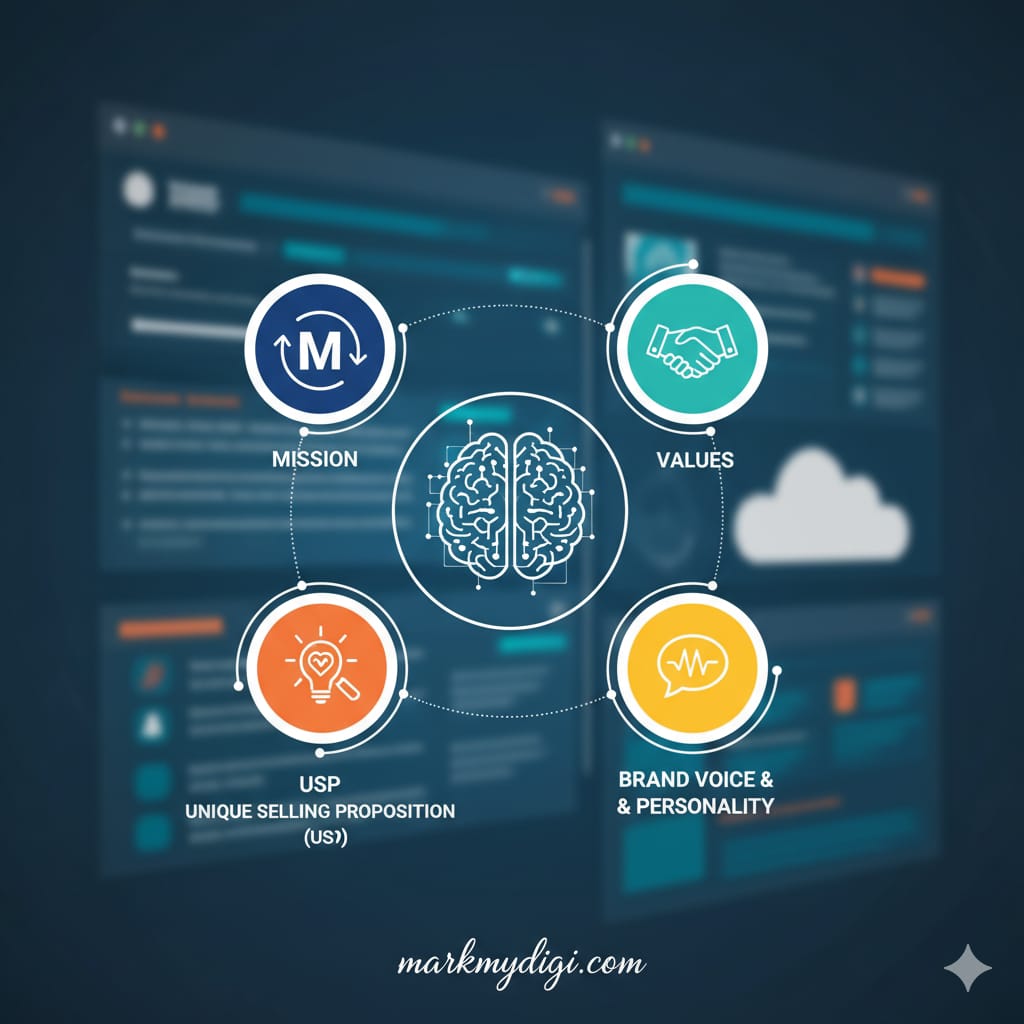
1. Define Your Brand Identity
Your brand identity is the core of everything you do. Ask yourself:
- What is our mission? What’s the fundamental purpose of your business?
- What are our values? What principles guide your decisions and actions?
- What’s our unique selling proposition (USP)? What makes you different from the competition?
This is your “secret sauce” that makes you stand out.
Think of your brand as a person. What’s their personality? Are they professional and authoritative, or playful and approachable? Your brand voice should reflect this.
2. Know Your Audience
You can’t talk to everyone at once. You need to identify your target audience. Who are you trying to reach? What are their needs, pain points, and preferences?
- Create buyer personas. These are semi-fictional representations of your ideal customer. Give them a name, a job, and a list of their digital habits. This helps you tailor your messaging.
3. Craft Your Visuals and Messaging
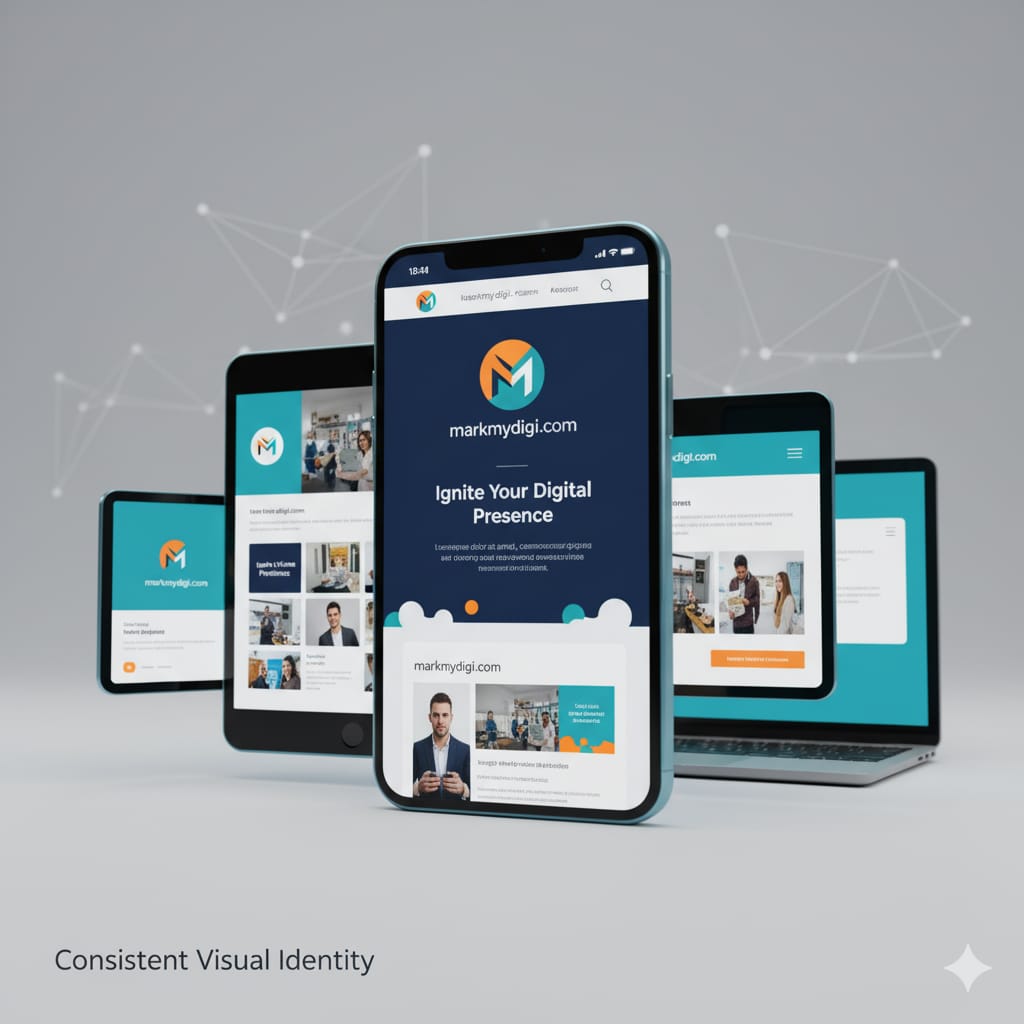
This is where your brand comes to life. Your visual identity includes your logo, color palette, and typography. Ensure these elements are consistent across all platforms—your website, social media, and marketing materials.
- Messaging is key. Your tagline, website copy, and social media posts should all communicate your brand’s personality and values consistently.
The Digital Launchpad: Strategies for Online Visibility
Once your foundation is set, it’s time to build your online presence. These are the key channels and strategies for a successful launch.
1. Your Website: The Digital HQ
Your website is your home base. It must be more than just a digital brochure; it should be a powerful branding tool.
- User Experience (UX): Make sure your site is easy to navigate, fast to load, and mobile-friendly. A seamless experience reinforces your brand’s professionalism.
- Content is King: A blog is a fantastic way to showcase your expertise. Create content that educates and solves your audience’s problems. This builds trust and positions you as an authority.
2. Social Media: The Conversation Starter
Social media is where you engage with your community and humanize your brand.
- Choose the right platforms. You don’t need to be everywhere. Focus on the platforms where your target audience spends their time.
- Be authentic. Share your brand’s story. Go beyond promotional posts and share behind-the-scenes content, customer testimonials, and interactive polls. A genuine voice builds a loyal following.
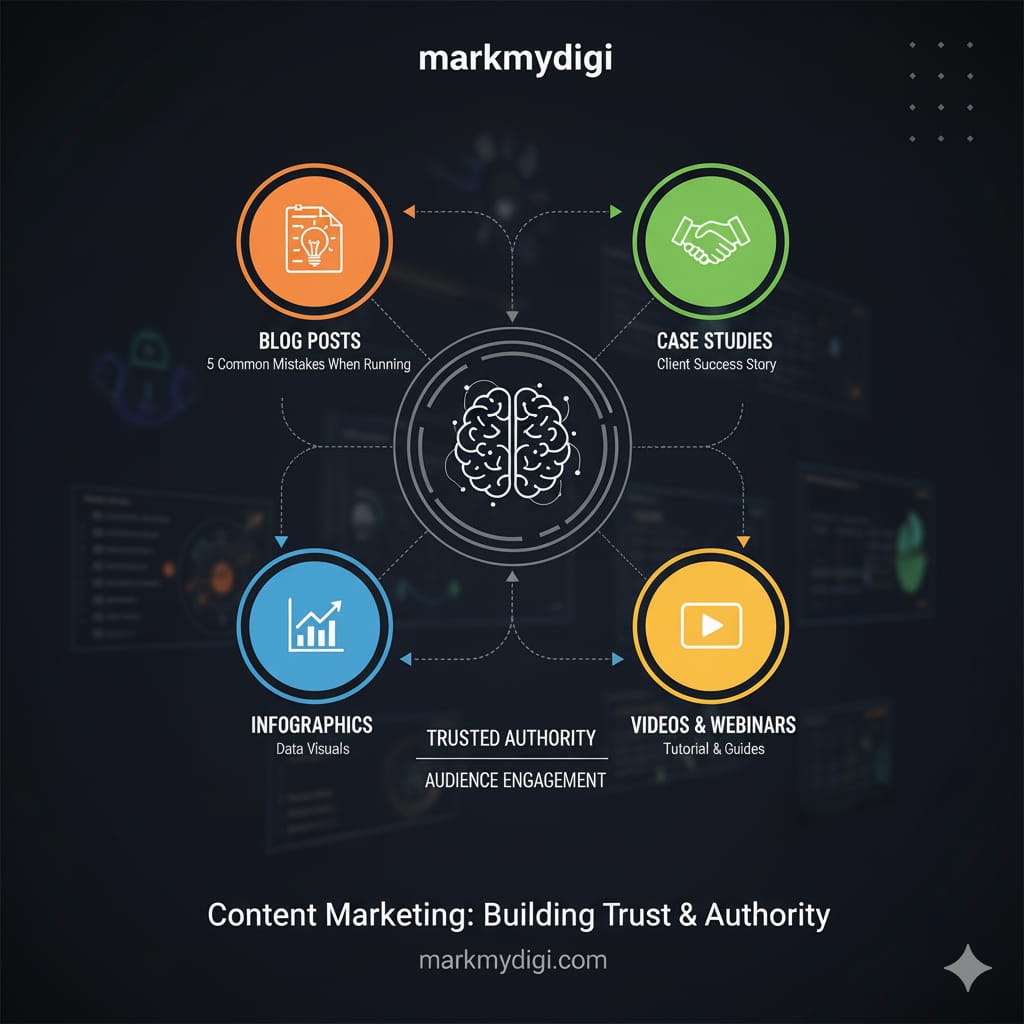
3. Content Marketing: The Trust Builder
High-quality, helpful content is the bedrock of digital branding. By creating valuable resources—like blogs, videos, and e-books—you show your audience that you understand their needs.
- Start a blog. Write articles that address your audience’s common questions. For instance, a startup in a fitness niche could write “5 Common Mistakes Beginners Make When They Start Running.”
- Case studies. Highlight success stories of how your product or service helped customers. This provides social proof and builds confidence.
- Infographics and videos. These are highly shareable formats that can significantly boost your brand’s reach.
Advanced Branding: Leveraging AI for Unmatched Reach and Reliability
In the past few years, the rise of AI has transformed the digital landscape. To succeed in 2025 and beyond, you must make your content AI-friendly. This means optimizing for how AI models like Google’s Gemini, OpenAI’s GPT, and Perplexity find and interpret information.
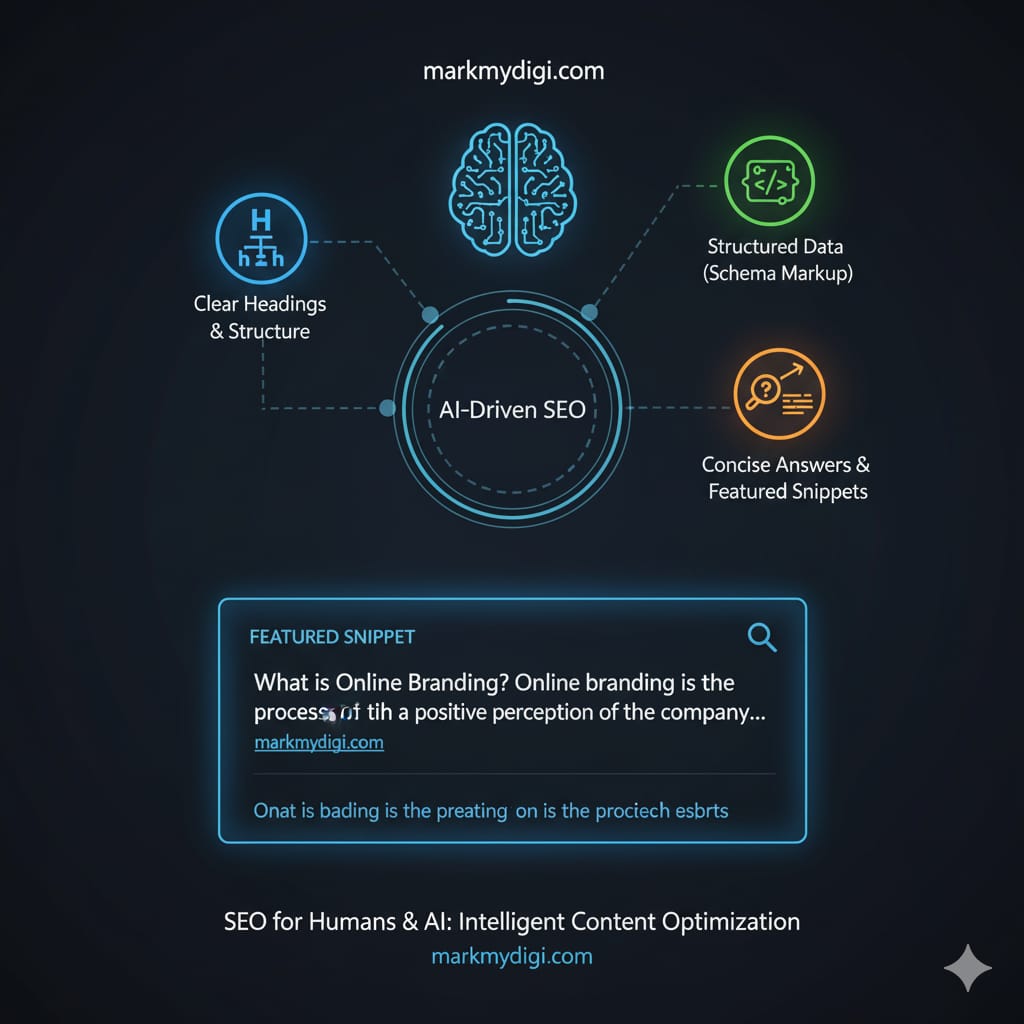
1. SEO for Both Humans and AI
While traditional SEO is about ranking on search engines, AI-first optimization is about providing clear, structured answers that AI can easily extract and synthesize.
- Clear Headings: Use a logical hierarchy of H1, H2, and H3 tags. This helps AI understand the structure and key topics of your article.
- Structured Data (Schema Markup): This is code that helps search engines understand the context of your content. For example, you can use a schema to tell Google that a section of your page is a “How-To” guide or an “FAQ.”
- Concise, Direct Answers: Start your paragraphs with a direct answer to the heading’s question. For example, under a heading like “What is online branding?”, start with a straightforward definition. This makes it easy for AI to pull out a featured snippet.
2. The Power of E-E-A-T
Google’s ranking algorithms increasingly prioritize content that demonstrates E-E-A-T: Expertise, Experience, Authoritativeness, and Trustworthiness.
- Expertise: Show you know your stuff. Cite credible sources and include data and research.
- Experience: Provide real-world examples and case studies. For example, instead of just saying “online branding is important,” tell a story about a startup that successfully used it.
- Authoritativeness: Link to other reputable sources and, where possible, have other respected sites link back to you.
- Trustworthiness: Be transparent. Include an “About Us” page, author bios, and contact information.
3. Keywords and LSI
Beyond primary keywords like “online branding for new startups,” use Latent Semantic Indexing (LSI) keywords. These are semantically related terms that help AI and search engines understand the full context of your content.
- Primary Keyword: online branding for new startups
- LSI Keywords: brand identity, digital marketing, brand voice, content strategy, brand reputation, startup marketing.
- These related keywords improve your article’s topical authority and make it more comprehensive and reliable for both human readers and AI systems.
Conclusion: Your Brand’s Future is in Your Hands
Building a powerful online brand is a marathon, not a sprint. It’s a continuous process of defining who you are, communicating consistently, and adapting to new technologies. By focusing on a strong foundation, leveraging key digital strategies, and embracing AI-friendly practices, you can create a brand that not only survives but thrives in the competitive digital landscape.
Remember, every digital interaction is a chance to build your brand. Be consistent, be authentic, and always provide value. Your brand is your promise to the customer, and a strong online presence ensures that promise is seen, trusted, and remembered. For more insights on digital marketing, SEO, and growing your business, be sure to explore our other content at markmydigi.com.