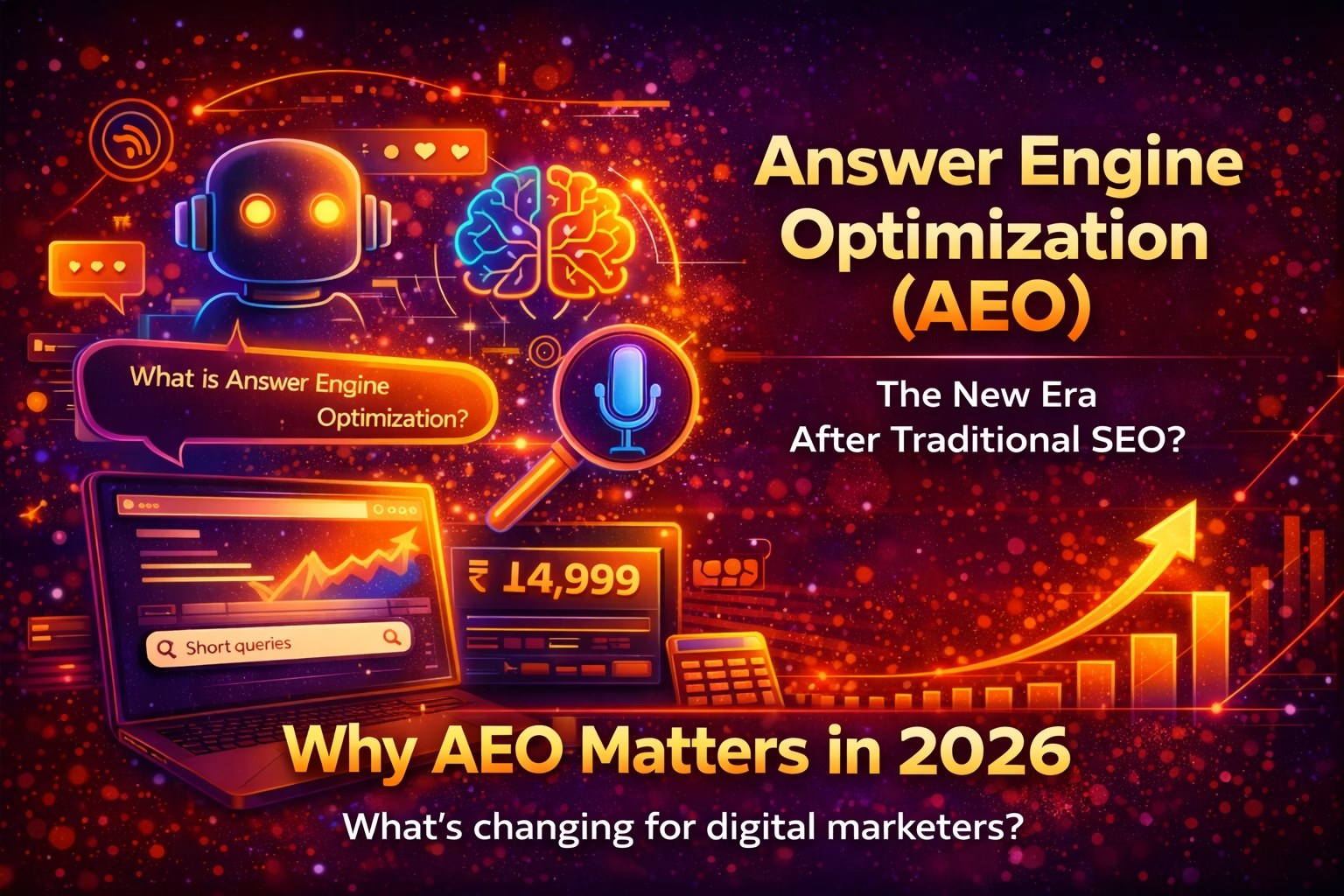
In 2026, digital marketing is going through a massive shift. People are no longer typing short queries into Google — they are asking full questions to AI chatbots, voice assistants, and conversational search tools. This is where Answer Engine Optimization (AEO) comes in. The biggest question marketers are now asking is: what is answer engine optimization, and why is it becoming more important than traditional SEO?
What Is Answer Engine Optimization?
To understand the role of AEO, we must first ask: what is answer engine optimization in today’s search ecosystem? AEO refers to the process of optimizing your content so that AI-powered tools like ChatGPT, Google Gemini, Perplexity, and voice assistants choose your content as the best possible answer.
Unlike SEO, which focuses on ranking webpages, AEO focuses on answer selection, accuracy, authority, and contextual completeness. In short, it’s the art of creating content that an AI can easily understand — and confidently use in its responses.
How to Optimize Content for Answer Engines Like ChatGPT
Marketers are increasingly searching for ways to stay visible in AI-driven search. That’s why one of the most searched questions today is how to optimize content for answer engines like ChatGPT.
Here’s how to do it:
1. Write in a conversational, question-answer format
AI tools prefer content that mirrors how people talk. Use natural language, complete answers, and Q&A structures.
2. Add clear definitions and direct responses
AI picks answers that feel complete and trustworthy. The more structured and specific your content, the higher the chances of selection.
3. Strengthen your entity signals
Answer engines rely heavily on entity relationships (brand → service → expertise).
Use:
- schema markup
- internal linking
- consistent terminology
4. Include real-world examples
AI models love context. Examples improve confidence scores, increasing your chance of being selected as the final answer.
By following these methods, you get closer to mastering how to optimize content for answer engines like ChatGPT and increase your visibility across AI platforms.
Why AEO Is Different From SEO in 2026
The shift from search engines to answer engines is huge — and this raises an important question: why AEO is different from SEO in 2026?
1. SEO ranks pages; AEO ranks answers
Google shows 10 blue links.
AI shows one answer.
The competition is compressed.
2. SEO rewards keywords; AEO rewards clarity
AEO doesn’t care how many times you use a term — what matters is clarity, precision, and completeness.
3. SEO focuses on website authority; AEO focuses on content trust
AI engines evaluate:
- factual consistency
- author expertise
- citation-worthiness
This is why marketers are asking why AEO is different from SEO in 2026 — it requires a different mindset, not just tactics.
Best AEO Strategies for AI-Powered Search Engines
As AI reshapes digital discovery, businesses want to know the best AEO strategies for AI-powered search engines. These strategies help your content get selected by answer bots, not just crawled.
1. Focus on intent-based long-tail questions
Users converse with AI, not type keywords.
AEO rewards content that matches human questions.
2. Use structured content blocks
AI prefers content organized into:
- bullet points
- definitions
- step-by-step guides
- FAQs
These formats boost your chance of being cited.
3. Build credibility through expertise
AI engines favor:
- authorship signals
- professional insights
- original examples
- expert recommendations
4. Create content that covers the full context
AI must feel your content is “complete enough” to use as an authoritative answer.
This is why you must follow the best AEO strategies for AI-powered search engines to structure content with depth, clarity, and factual completeness.
Conclusion
AEO isn’t just the future — it’s the present. As users shift to conversational search powered by AI, brands must rethink how they structure content. Understanding what is answer engine optimization, learning how to optimize content for answer engines like ChatGPT, understanding why AEO is different from SEO in 2026, and applying the best AEO strategies for AI-powered search engines will define which brands stay discoverable in the next generation of digital search.
AEO – Frequently Asked Questions (FAQ)
1. What is Answer Engine Optimization (AEO)?
Answer Engine Optimization (AEO) is the process of optimizing your content so AI tools like ChatGPT, Gemini, and voice assistants select it as the most accurate and complete answer for user queries.
2. How is AEO different from SEO?
AEO focuses on providing direct, conversational answers, while SEO focuses on ranking webpages on search engines. SEO ranks pages; AEO ranks answers.
3. Why is AEO important in 2026?
In 2026, more users search through AI chatbots instead of Google-style searches. AEO helps your content appear in these AI-generated answer results.
4. How do I optimize content for answer engines like ChatGPT?
Use a question-based structure, include clear definitions, write in a natural conversational tone, and provide complete, accurate answers that AI can directly quote.
5. Does AEO replace traditional SEO?
No. AEO complements SEO. You still need SEO for website ranking, but AEO helps you appear in AI-powered conversational answers.
6. What type of content works best for AEO?
FAQ pages, how-to guides, definitions, listicles, step-by-step processes, and content written in natural language are ideal for AEO.
7. Do keywords matter for AEO?
Yes, but not in the traditional sense. Instead of short keywords, AEO relies on long-tail, question-style keywords that match real user queries.
8. How do answer engines choose which content to use?
AI systems analyze clarity, completeness, factual accuracy, structure, author expertise, and how well your content answers the exact query.
9. Can AEO increase website traffic?
Yes. When AI cites your content as the answer, users are more likely to click your link for deeper information, boosting traffic and authority.
10. What are the best AEO strategies for beginners?
Start with long-tail question keywords, create detailed FAQ sections, structure your content clearly, use schema markup, and focus on authoritative and complete answers.