

Understanding Brand Expansion
In the competitive landscape of modern business, a brand expansion strategies are crucial for long-term sustainability and growth. Brand expansion refers to the process by which a company extends its reach into new markets or enhances its existing product offerings. Companies may pursue expansion through various forms, including product line extensions, market penetration strategies, and geographical growth.
Product line extension is one such method where a brand introduces new products under its existing brand name. This strategy aims to cater to a broader consumer base, leveraging the established reputation of the brand while simultaneously driving business growth and brand scaling. Market penetration involves penetrating new customer segments within existing markets, enhancing the brand’s influence and visibility. Geographical expansion, on the other hand, entails introducing a brand into new regions or countries, necessitating careful brand positioning for market expansion to resonate culturally and contextually with new audiences.
Businesses opt for a brand expansion strategy for several reasons. The primary objective often includes increased market share, enhanced revenue streams, and improved brand loyalty. By utilizing digital marketing strategies for brand expansion, companies can effectively engage with targeted demographics, resulting in higher conversion rates and sustained growth. Integrating these strategies allows brands to tap into new customer bases while solidifying their presence in established markets.
Successful examples abound, as seen with brands like Apple or Coca-Cola, which have effectively utilized various brand expansion strategies. Apple, for example, consistently expands its product line with innovative devices, while Coca-Cola continually penetrates new markets through strategic marketing approaches. These instances not only exemplify effective growth strategies but also highlight the importance of adapting to consumer needs and market trends.
Powerful Brand Expansion Strategies
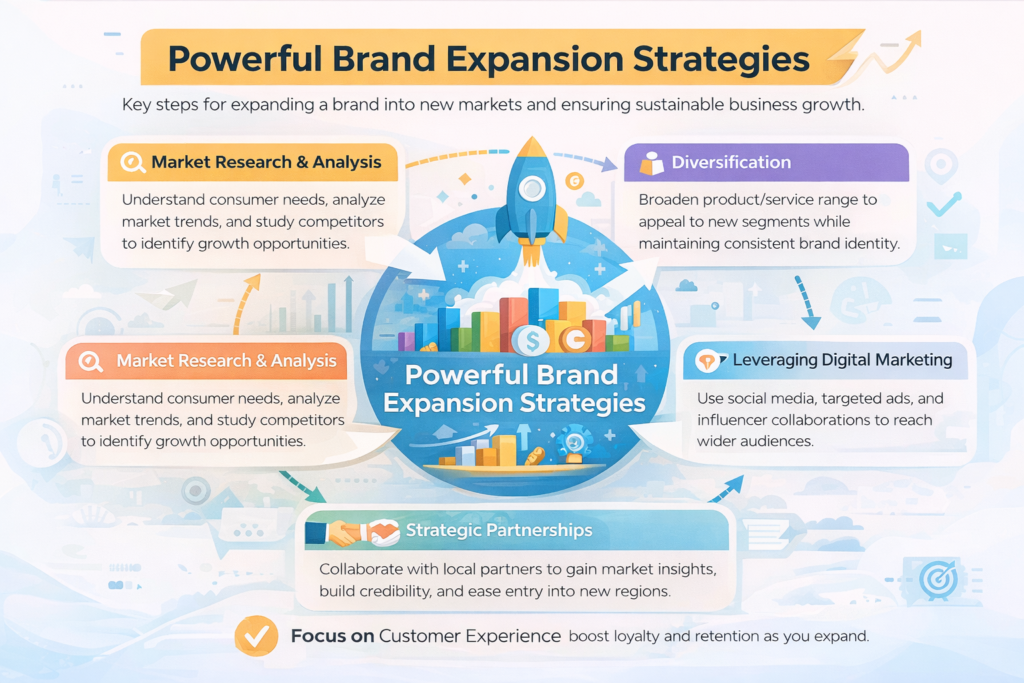
Expanding a brand is a multifaceted endeavor that requires a strategic approach to ensure its success across new markets. One of the cornerstones of a robust brand expansion strategy is thorough market research. Understanding consumer needs, preferences, and purchasing behavior is crucial for identifying opportunities for business growth and brand scaling. Companies should invest time in analyzing market trends and competitors to gain insights that will inform their expansion plans.
Diversification is another effective approach that allows brands to mitigate risks while exploring new segments. By broadening the range of products or services offered, brands can appeal to different demographics and fulfill a wider array of customer needs. However, it is essential to maintain a consistent brand identity and coherence across offerings to avoid confusion and potential alienation of existing customers.
Leveraging digital marketing strategies for brand expansion is vital in the contemporary business landscape. Effective use of social media platforms enables brands to reach a broader audience and create meaningful engagements. Tailored content, targeted advertisements, and influencer collaborations are essential components that should be part of a digital marketing plan aiming to enhance brand positioning for market expansion.
Building strategic partnerships and collaborations can also play a significant role in amplifying brand presence in new markets. Collaborating with local players who understand the nuances of their respective markets can facilitate smoother entry and reduce time-consuming learning curves. However, it is imperative that both parties align on values and goals to foster a harmonious partnership.
Finally, focusing on customer experience improvement is essential for maintaining a positive reputation and securing customer loyalty as businesses expand. Brands that prioritize customer feedback and adapt their offerings accordingly are more likely to thrive in competitive environments. By implementing these comprehensive strategies, businesses can successfully navigate the complexities of brand expansion and establish a strong foothold in new markets.
Challenges and Considerations in Brand Expansion
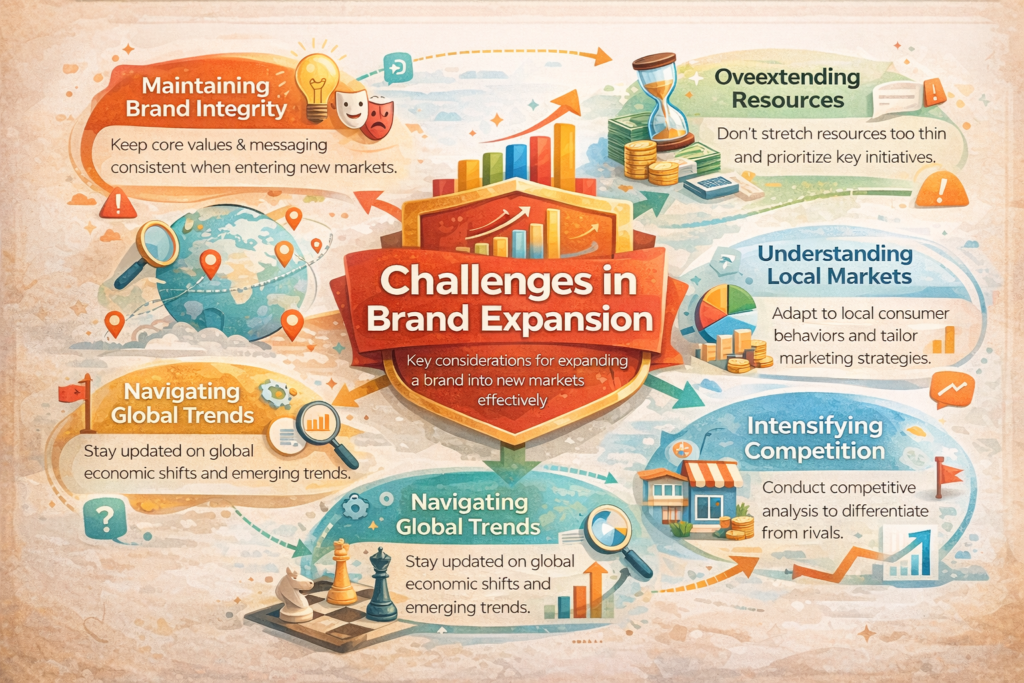
The journey of brand expansion can be fraught with numerous challenges that require careful navigation. One of the primary concerns for companies implementing a brand expansion strategy is maintaining brand integrity. As brands look to expand into new markets, they must ensure that their core values and messaging remain consistent. A failure to do so may lead to customer confusion and a diluted brand identity, making it essential to focus on brand positioning for market expansion.
Another significant challenge is the risk of overextension. While pursuing growth, brands can sometimes stretch their resources too thin, leading to operational inefficiencies and a decrease in product quality. This risk underscores the importance of thorough research and planning, particularly when determining how to expand a brand in new markets. Proper resource allocation and prioritizing key initiatives can help mitigate the chance of overextension.
Customer perceptions also play a critical role in the brand expansion process. New markets often come with unique consumer behaviors and preferences, and brands must be prepared to adapt their messaging accordingly. This necessitates effective digital marketing strategies for brand expansion that are locally relevant, ensuring that potential customers feel a connection to the brand.
Furthermore, increased competition can present a formidable barrier during the brand scaling process. Established players in the new market may resist new entrants, making differentiation essential. Brands need to conduct comprehensive competitive analysis to identify market gaps and positioning opportunities.
Lastly, global market trends can influence brand expansion efforts, from economic shifts to changes in consumer behavior driven by technology. Continuous assessment of these trends is crucial, as they can provide valuable insights into future challenges and opportunities. In conclusion, addressing these challenges through strategic planning and flexibility will enable brands to navigate the complexities of expansion more effectively, facilitating business growth and successful brand scaling.
Measuring Success in Brand Expansion
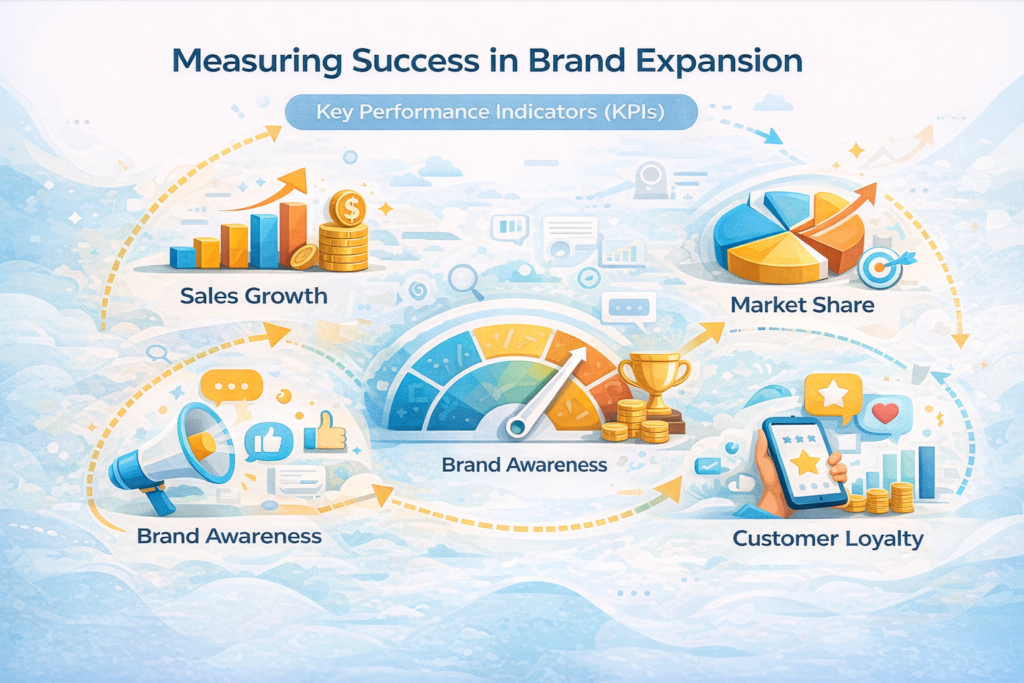
Measuring the success of a brand expansion strategy requires a multi-faceted approach that encompasses various key performance indicators (KPIs). Brands venturing into new markets should prioritize tracking metrics such as sales growth, market share, brand awareness, and customer loyalty. These indicators not only reflect the immediate impact of an expansion effort but also provide insight into longer-term business growth and brand scaling.
Sales growth serves as one of the most straightforward KPIs. By analyzing revenue figures before and after market entry, brands can gauge the financial effectiveness of their expansion strategies. Monitoring changes in market share is equally essential, as it reflects how a brand’s position has evolved relative to competitors in a new landscape. A significant market share indicates successful brand positioning for market expansion, showcasing that a brand is appealing to the target audience.
Brand awareness is another critical aspect to consider. This can be measured through surveys, social media engagement metrics, and website traffic analytics. Understanding how well customers are recognizing and recalling a brand can inform digital marketing strategies for brand expansion, enabling companies to refine their promotional efforts according to audience reception.
Customer loyalty metrics, such as repeat purchase rates and Net Promoter Scores (NPS), provide insight into how well a brand is resonating with customers in a new market. A high level of customer loyalty suggests that the brand has successfully established a connection with its audience, which is crucial for sustained success. Feedback loops are also vital; brands should implement systems that allow them to adapt their strategies in real-time based on performance data and shifting market conditions. This adaptability is essential for effective brand expansion and builds a foundation for long-term growth.
Frequently Asked Questions (FAQ)
1. What are Brand Expansion Strategies?
Brand Expansion Strategies are structured plans businesses use to grow beyond their current market position. These strategies may include Market Penetration, Product Line Extension, entering new geographic regions, or leveraging Digital Marketing for Brands to reach wider audiences and increase revenue.
2. How does Market Penetration help in brand expansion?
Market Penetration is a key component of Brand Expansion Strategies. It focuses on increasing sales within existing markets by targeting new customer segments, improving brand visibility, and strengthening competitive positioning. This approach helps businesses grow without launching entirely new products.
3. What is Product Line Extension in brand expansion?
Product Line Extension is a strategy where a company introduces new products under an existing brand name. This method allows businesses to leverage established brand trust while expanding offerings, supporting long-term Brand Expansion Strategies and sustainable growth.
4. Why is Digital Marketing for Brands important in expansion?
Digital Marketing for Brands plays a crucial role in modern Brand Expansion Strategies. Through SEO, paid advertising, content marketing, and social media campaigns, businesses can effectively enter new markets, increase brand awareness, and drive higher engagement and conversions.
5. What challenges should businesses consider during Brand Expansion?
During Brand Expansion, companies may face challenges such as maintaining brand consistency, adapting to local customer preferences, managing competition, and avoiding overextension. A balanced strategy combining Market Penetration, Product Line Extension, and Digital Marketing for Brands helps mitigate these risks.
6. How can businesses measure the success of Brand Expansion Strategies?
Success can be measured using KPIs such as sales growth, increased market share, improved brand awareness, customer retention, and ROI from Digital Marketing for Brands campaigns. Continuous performance tracking ensures sustainable expansion.